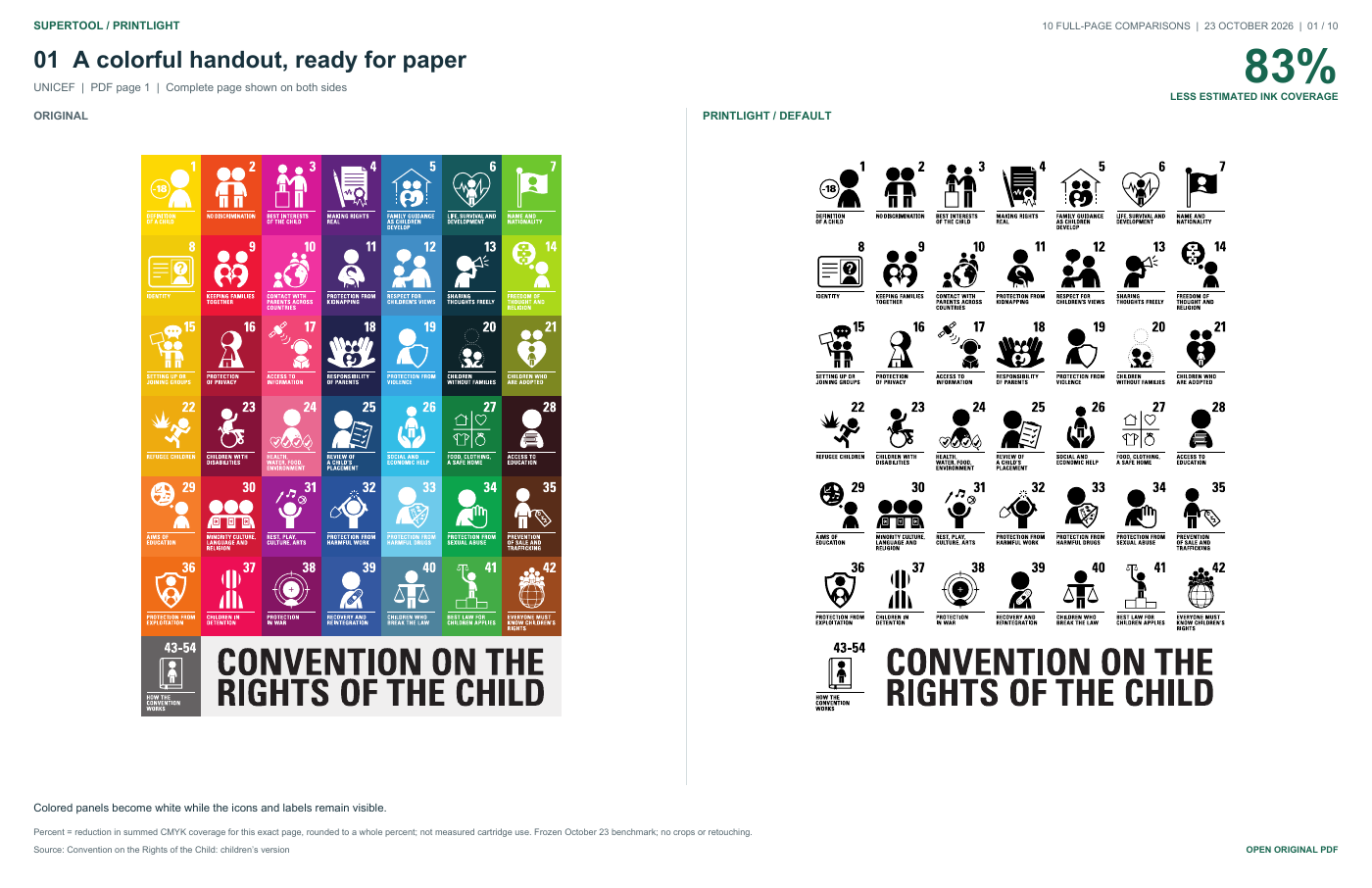
On the UNICEF handout below, PrintLight reduced estimated ink coverage by 83%. On the CDC poster, 76%. On the EPA cover, 83%. Those are results for the exact pages shown here, with the original and output side by side.
That visible difference is why we are proud of PrintLight. A useful handout should be practical to print. Heavy backgrounds and colored panels can use ink without helping someone read a paper copy. PrintLight prepares a lighter version of the PDF you already need.
Here are 10 complete-page comparisons from our October 2026 benchmark. Every image shows the original on the left and PrintLight on the right, at the same scale, without cropping. Click any comparison to enlarge it.
The percentages are digital estimates of combined cyan, magenta, yellow and black coverage, not physical cartridge tests or guaranteed ink savings. These examples were selected to show useful changes; they do not represent every PDF. Default processing can omit large pictures.
Download the 10-page comparison report (PDF) | Try PrintLight on your PDF
83% less estimated ink coverage
UNICEF: a colorful child-rights handout
PDF page 1. Colored panels become white while the icons and labels remain visible.
76% less estimated ink coverage
CDC: a lighter handwashing poster
PDF page 1. Colored banners and the blue background clear; the five instructional illustrations remain.

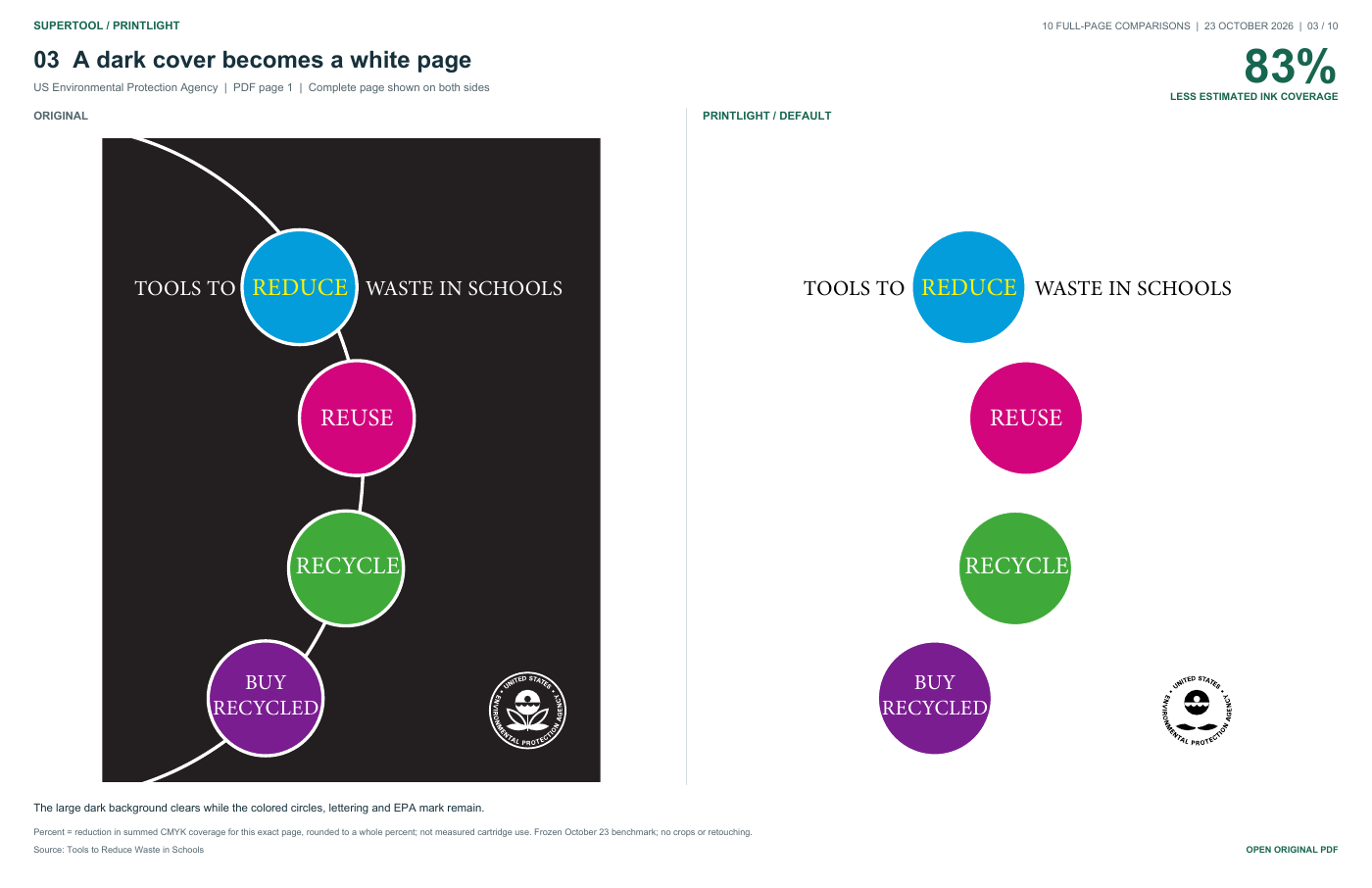
83% less estimated ink coverage
EPA: a dark cover becomes a white page
PDF page 1. The large dark background clears while the colored circles, lettering and EPA mark remain.
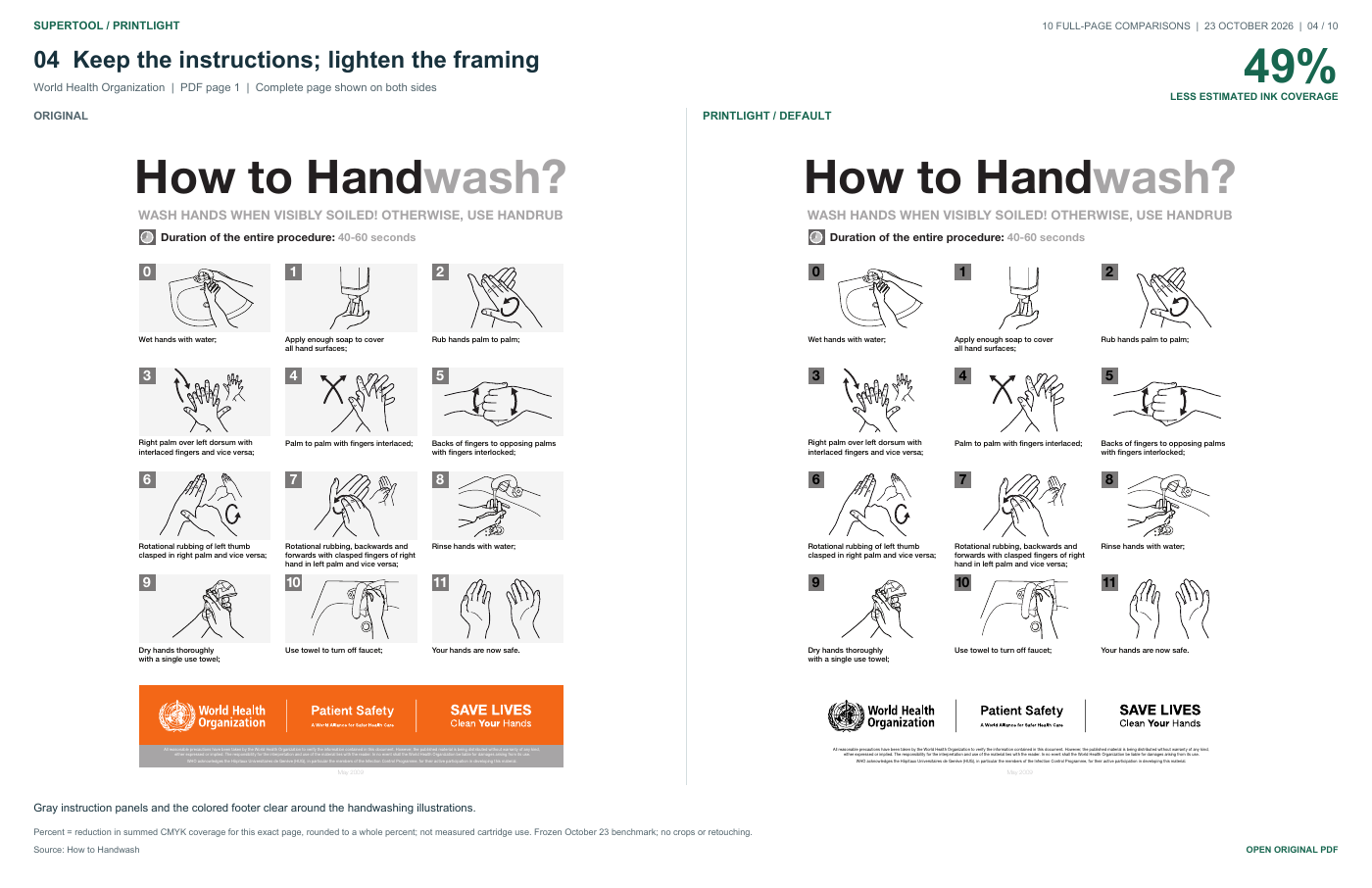
49% less estimated ink coverage
WHO: keep the instructions, lighten the framing
PDF page 1. Gray instruction panels and the colored footer clear around the handwashing illustrations.
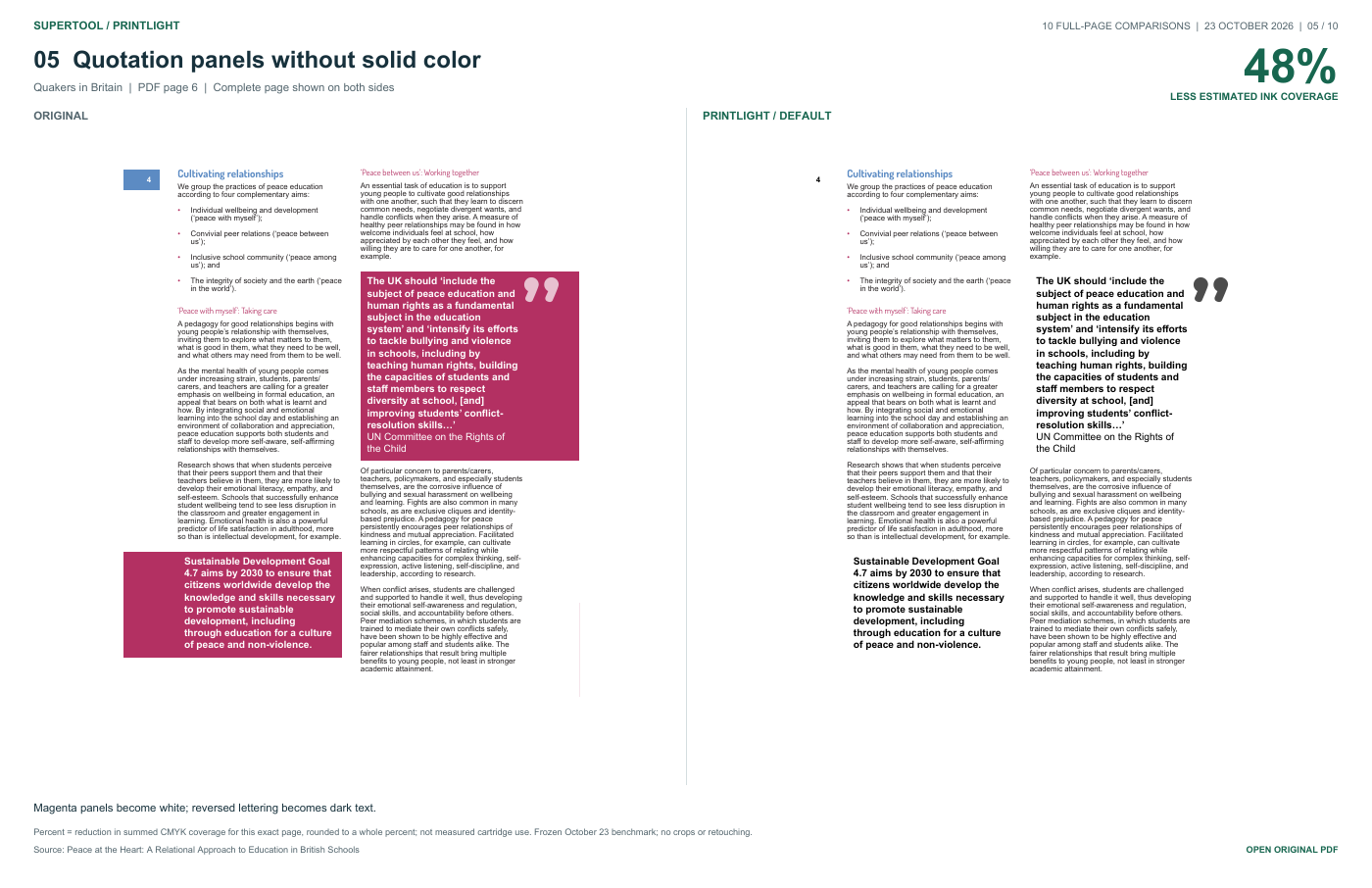
48% less estimated ink coverage
Peace at the Heart: quotation panels without solid color
PDF page 6. Magenta panels become white; reversed lettering becomes dark text.
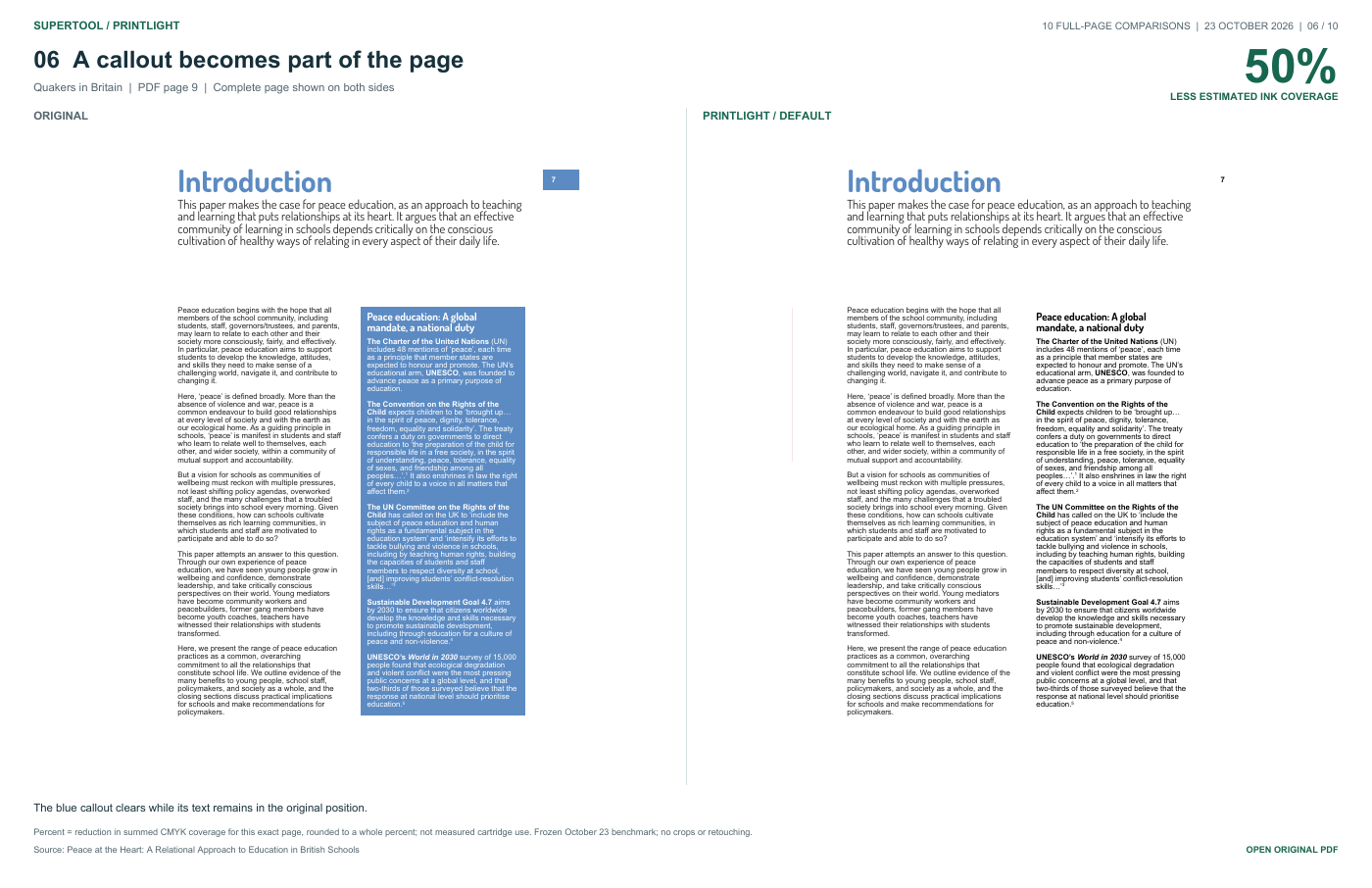
50% less estimated ink coverage
Peace at the Heart: a blue callout becomes white
PDF page 9. The blue callout clears while its text remains in the original position.
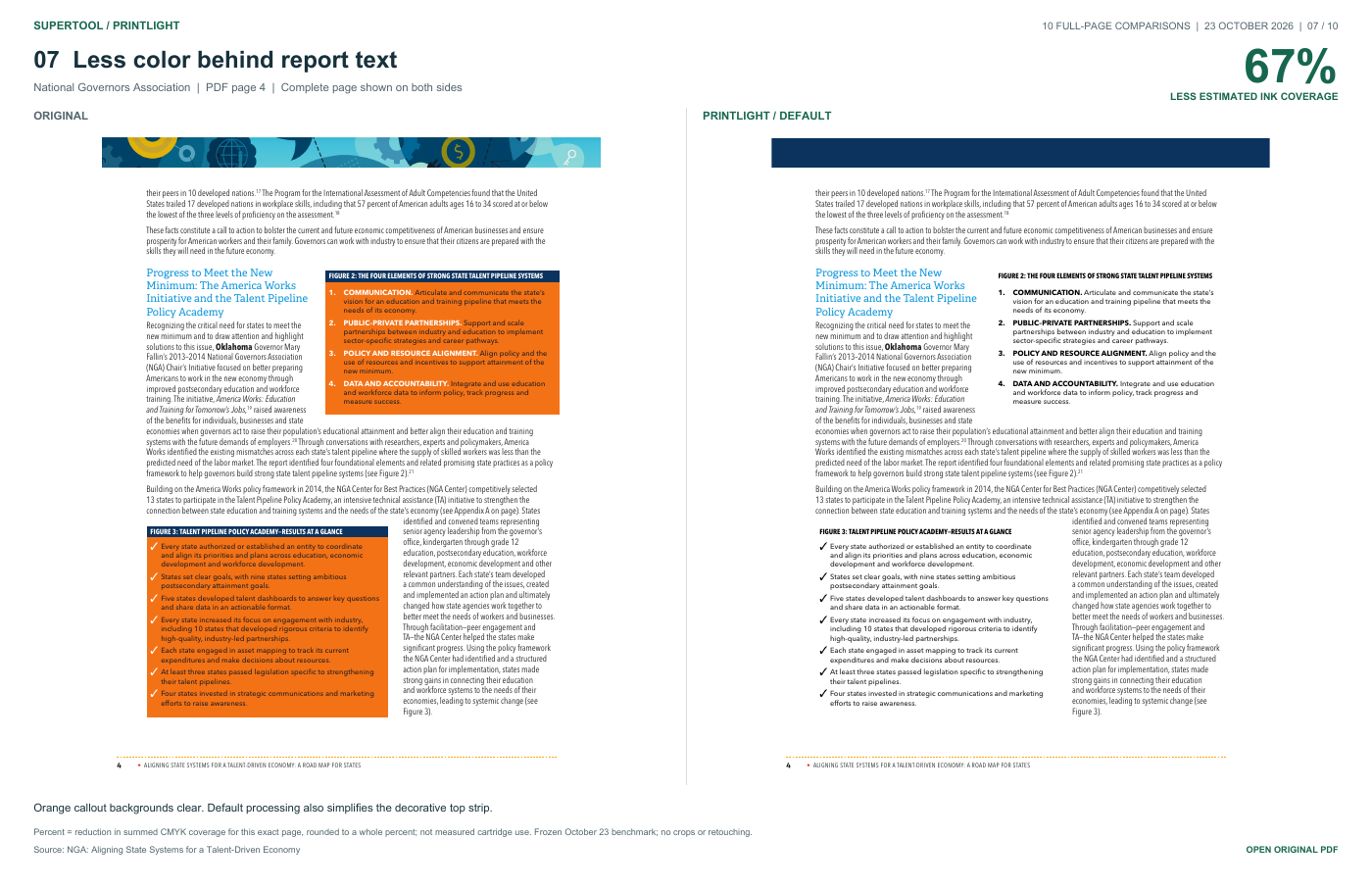
67% less estimated ink coverage
NGA: less color behind report text
PDF page 4. Orange callout backgrounds clear. Default processing also simplifies the decorative top strip.
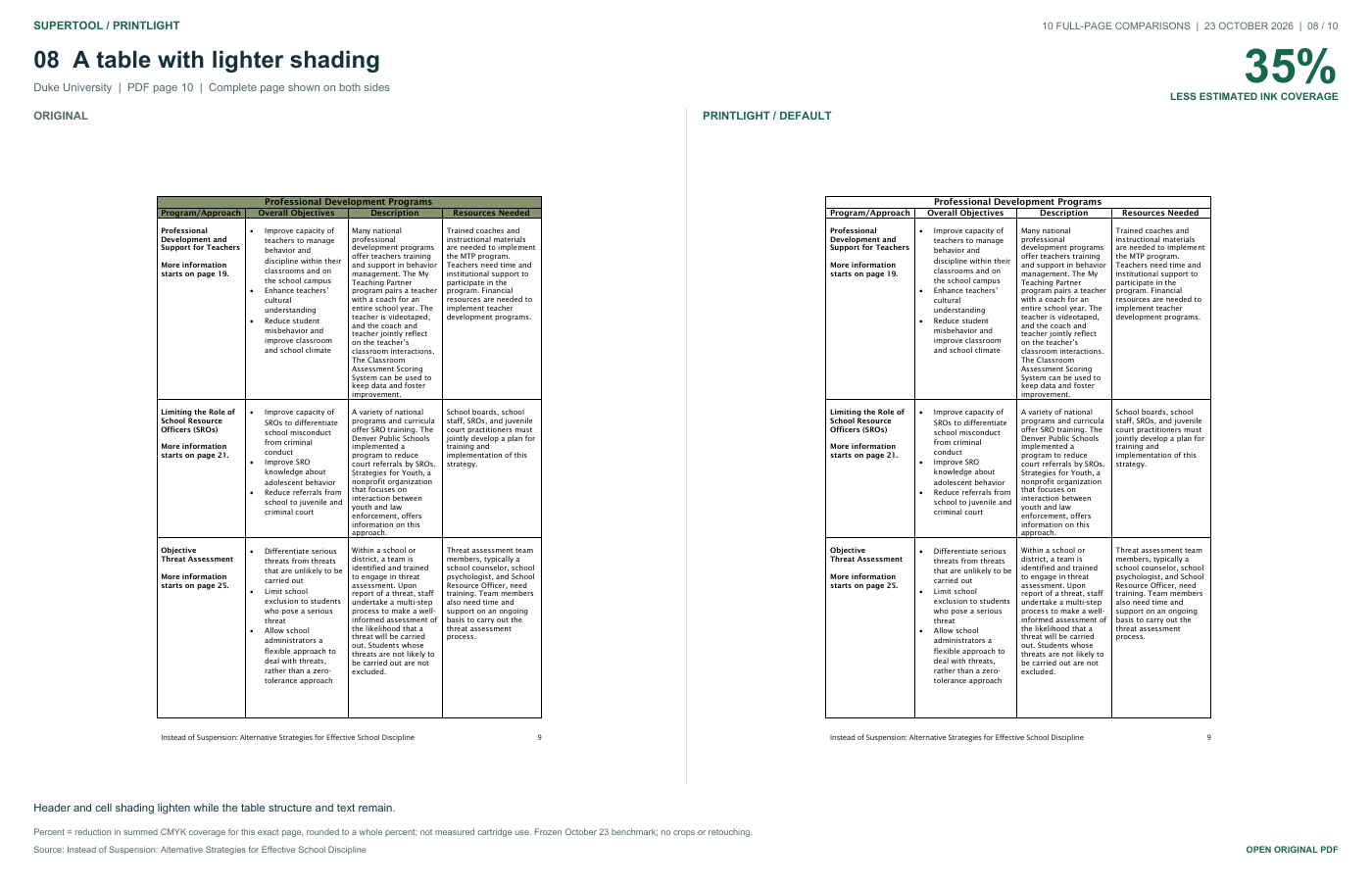
35% less estimated ink coverage
Duke: a table with lighter shading
PDF page 10. Header and cell shading lighten while the table structure and text remain.
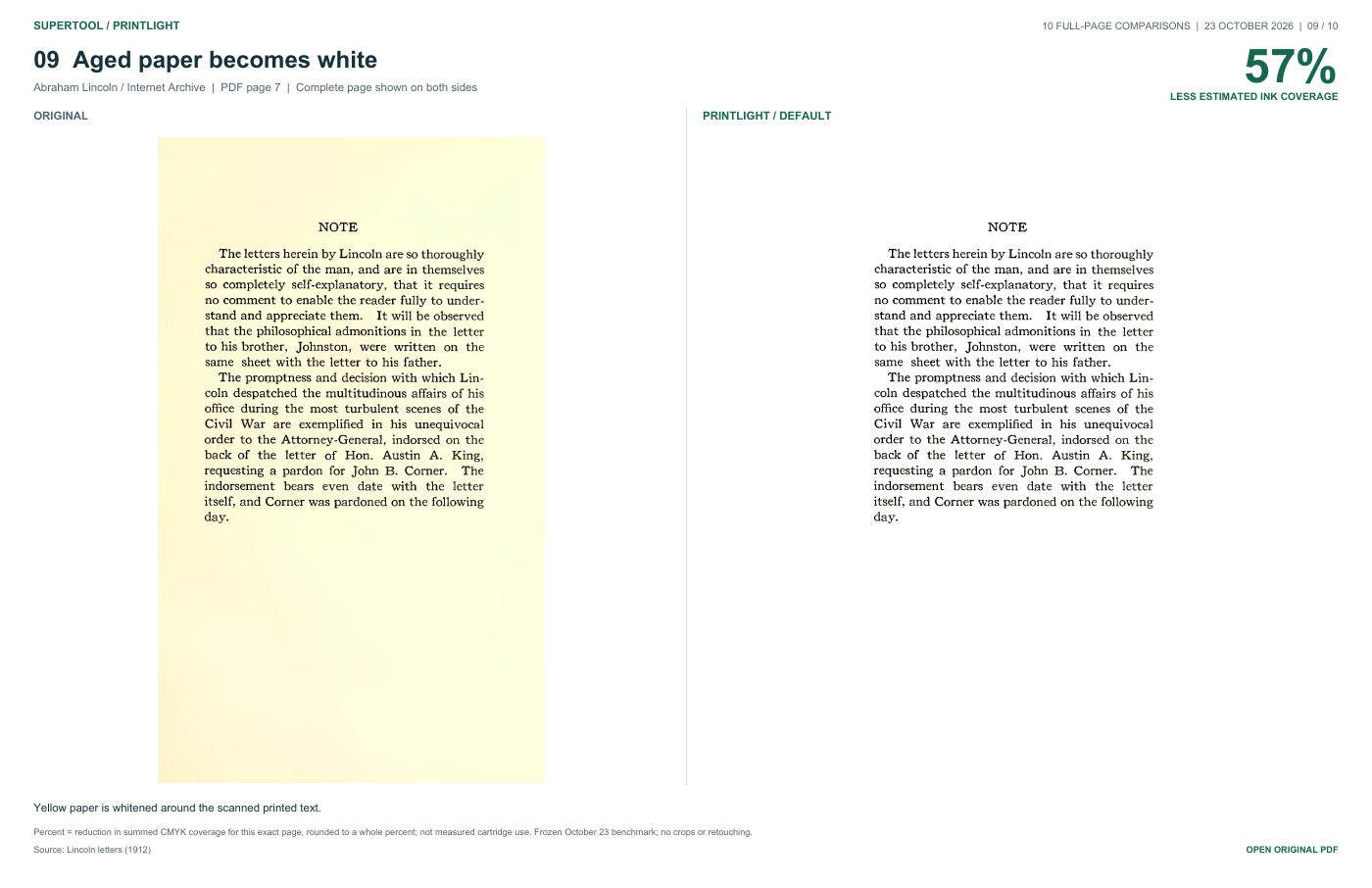
57% less estimated ink coverage
Lincoln letters: aged paper becomes white
PDF page 7. Yellow paper is whitened around the scanned printed text.
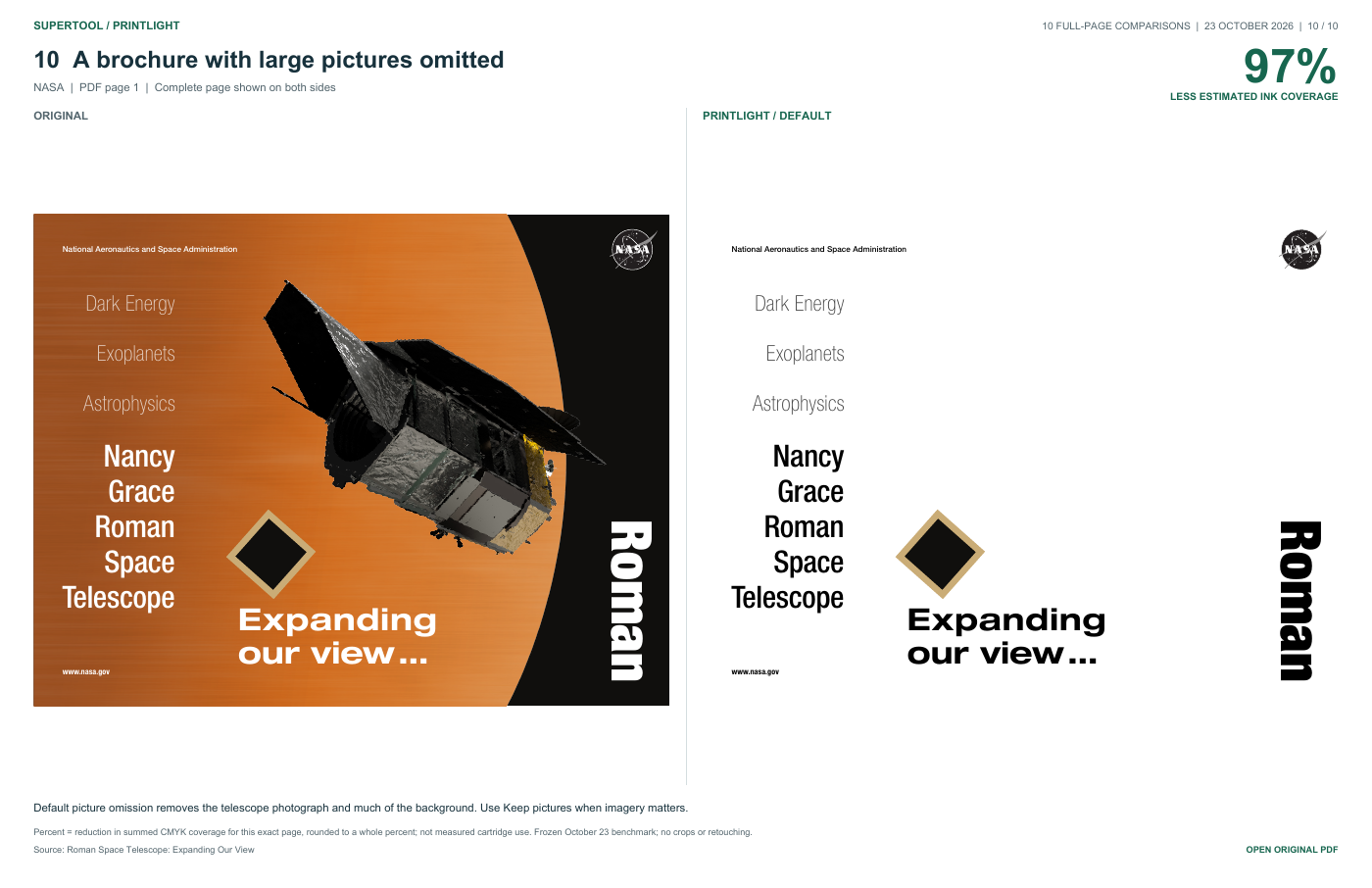
97% less estimated ink coverage
NASA: a brochure with large pictures omitted
PDF page 1. Default picture omission removes the telescope photograph and much of the background. Choose Keep pictures when imagery matters.
What the percentages measure
For each page, we add the estimated cyan, magenta, yellow and black coverage before and after processing. The reduction is (before minus after) / before. The figures are rounded to whole percentages. They describe these exact frozen benchmark pages, not the average for their entire documents.
The separate PrintLight benchmark and white paper explain the broader selected-document results, method, cost model and limitations. Page-specific figures here should not be substituted for the whole-document results there.
Preview, then print lighter
Pictures, pale text and colored labels can carry information. Keep your original, compare the preview, and choose Keep pictures when images matter. The NASA example deliberately shows picture omission; it is not a claim that every visual element is preserved. Check important diagrams, labels and tables before printing.
We are hopeful about the practical difference this can make for people printing teaching materials, community handouts and reports. The next useful test is a PDF you already plan to print.
Try PrintLight or download all 10 full-page comparisons.
Sources: UNICEF, CDC, EPA, WHO, Quakers in Britain, National Governors Association, Duke University, and the Lincoln/NASA publications identified in the report. Original publishers do not endorse PrintLight. Examples reuse the frozen October 23, 2026 benchmark outputs.